Global warming in Pakistan has become a serious environmental issue affecting weather, agriculture, water supplies, forests, wildlife, and human health. Rising temperatures, changing rainfall patterns, glacier melting, floods, droughts, and heatwaves create major challenges for the country. Pakistan faces these problems even though its share of global greenhouse gas emissions remains relatively small.
What Is Global Warming?
Global warming means a long-term increase in the average temperature of the Earth. Human activities release gases such as carbon dioxide, methane, and nitrous oxide into the atmosphere. These gases trap heat and make the planet warmer.
Major sources of greenhouse gas emissions include:
- Burning coal, oil, and gas
- Vehicle emissions
- Industrial activities
- Cutting forests
- Poor waste management
- Large-scale farming and livestock production
- Excessive use of fossil fuels
The warming planet affects every region, but countries with limited resources face greater difficulty in dealing with environmental damage.
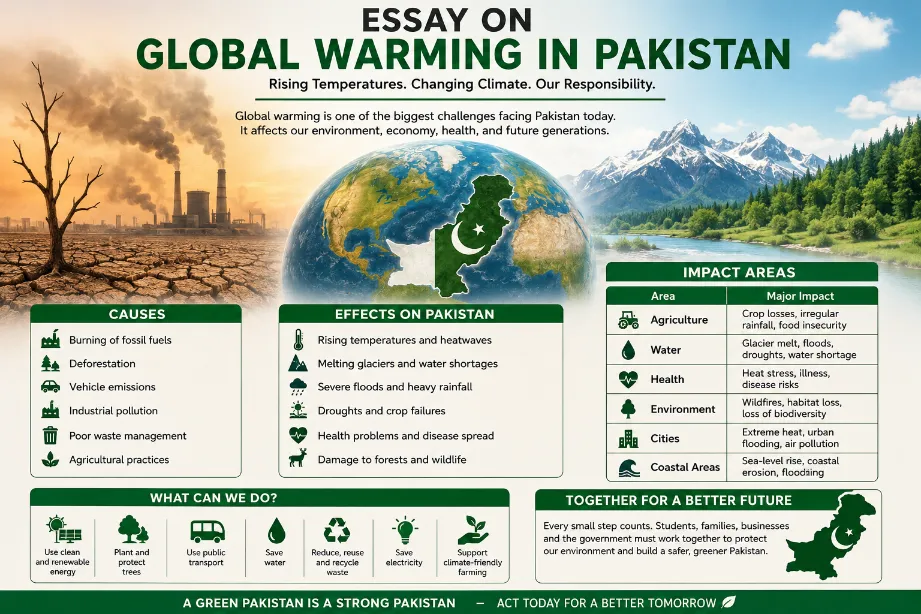
Global Warming in Pakistan
Pakistan has a wide range of climates, from high mountain regions to dry plains and coastal areas. This geographic variety exposes the country to several climate-related hazards.
High temperatures can increase water demand and place pressure on crops and livestock. Heavy rainfall can produce destructive floods, while long dry periods can damage farmland and reduce water availability.
| Area | Major Effect |
|---|---|
| Agriculture | Crop losses, heat stress, irregular rainfall |
| Water | Glacier melt, floods, droughts |
| Health | Heat illness and disease risks |
| Forests | Wildfires and habitat loss |
| Cities | Extreme heat and urban flooding |
| Coastal areas | Sea-level rise and coastal flooding |
Causes of Global Warming in Pakistan
Pakistan contributes a relatively small share of worldwide greenhouse gas emissions, yet several domestic activities add to the problem.
Burning of Fossil Fuels
- Power plants, factories, vehicles, and other machines use fossil fuels. Petrol, diesel, coal, and natural gas release carbon dioxide during combustion.
Deforestation
- Trees absorb carbon dioxide and help regulate local temperatures. Forest removal reduces this natural carbon storage and can also increase soil erosion and flood risks.
Transport Emissions
- Cars, buses, trucks, motorcycles, and other vehicles release greenhouse gases. Rapid urban expansion has increased pressure on transport systems in major cities.
Industrial Pollution
- Factories consume energy and may release greenhouse gases and other pollutants. Cement production, brick kilns, steel manufacturing, and other industrial activities can add to emissions.
Agricultural Activities
- Agriculture supports millions of families in Pakistan, but some farming practices produce methane and nitrous oxide. Livestock, rice cultivation, fertilizers, and poorly managed agricultural waste can contribute to greenhouse gas emissions.
Effects of Global Warming on Pakistan
Global warming affects Pakistan in many ways. The consequences reach farms, homes, businesses, roads, rivers, and public services.
Extreme Heat
- Heatwaves can cause dehydration, heat exhaustion, and other health problems. Outdoor workers, older adults, and young children face greater risks during periods of severe heat.
Melting Glaciers
- Pakistan has many glaciers in the northern mountain ranges. Higher temperatures can speed up glacier melting and increase the risk of glacial lake outburst floods. Over a longer period, changes in glacier water supplies may also affect river flows.
Floods
- Heavy rainfall combined with glacier melt can create severe flooding. Floods can destroy houses, roads, bridges, schools, crops, and livestock.
Drought
- Some regions face prolonged dry periods and water shortages. Low rainfall can reduce crop production and place additional pressure on groundwater and rivers.
Agricultural Losses
- Farmers depend heavily on suitable temperatures and regular water supplies. Excessive heat, unexpected rainfall, floods, and drought can reduce crop yields.
Health Problems
- Hot weather can increase heat-related illness. Climate changes can also affect the spread of some infectious diseases and worsen air-quality problems in certain areas.
Damage to Wildlife
- Changes in temperature, water availability, and natural habitats can place pressure on animals and plants. Mountain ecosystems face particular risks from changing environmental conditions.
Global Warming and Pakistan’s Agriculture
Agriculture has a major role in Pakistan’s economy and rural life. Climate stress can affect wheat, rice, cotton, sugarcane, fruits, vegetables, and other crops.
Farmers can face:
- Reduced crop yields
- Water shortages
- Soil degradation
- Heat stress
- Pest problems
- Flood damage
- Drought-related losses
- Higher irrigation needs
Modern irrigation methods, better crop varieties, improved weather information, and responsible water use can help farmers manage these pressures.
Global Warming and Water Resources
Pakistan relies heavily on the Indus River system for agriculture, drinking water, hydropower, and industry. Climate change can alter rainfall and snowmelt patterns across the country.
Glacier melt presents two different concerns. Faster melting can increase water and flood risks in the short term. Long-term changes in glacier size can reduce dependable water supplies in some areas.
Water conservation has therefore become an important part of environmental planning.
Steps to Reduce Global Warming in Pakistan
Pakistan can reduce emissions and strengthen climate resilience through practical measures.
- Expand solar, wind, and other clean energy sources.
- Improve public transport in large cities.
- Promote electric and fuel-efficient vehicles.
- Plant and protect native trees.
- Control illegal forest cutting.
- Improve waste collection and recycling.
- Promote water-saving irrigation.
- Reduce industrial emissions.
- Encourage energy-efficient buildings.
- Improve flood warning systems.
- Support climate-resilient farming.
- Increase public awareness about environmental protection.
Role of Students in Fighting Global Warming
Students can also contribute to environmental protection. Small actions across schools, colleges, and communities can reduce waste and conserve resources.
Students can:
- Plant trees and care for them.
- Avoid unnecessary electricity use.
- Reduce plastic consumption.
- Use public transport or walk for short journeys.
- Keep classrooms and public areas clean.
- Take part in tree-planting campaigns.
- Save water at home and school.
- Encourage family members to adopt eco-friendly habits.
Role of the Government
Government policies can make a major difference. Authorities can promote renewable energy, protect forests, improve public transport, strengthen disaster management, and support farmers facing climate-related problems.
Pakistan can also work with international organizations to obtain technical assistance, climate finance, and modern technology. Strong cooperation between federal and provincial authorities can improve the results of environmental programs.
Conclusion
Global warming in Pakistan presents serious challenges for the environment, economy, agriculture, water resources, and public health. Rising temperatures, changing rainfall, floods, droughts, glacier melt, and extreme weather can affect millions of lives.
Pakistan needs practical environmental policies, cleaner energy, forest protection, efficient water use, better urban planning, and public participation. Students, families, businesses, farmers, and government institutions all have a role in reducing environmental damage. Collective action can help Pakistan protect its natural resources and create a safer future for coming generations.
What is global warming in Pakistan?
Global warming in Pakistan refers to the long-term increase in temperatures and related climate changes affecting the country’s environment, agriculture, water resources, and communities.
What are the main causes of global warming?
Major causes include fossil-fuel use, deforestation, transport emissions, industrial activity, and certain agricultural practices.
How does global warming affect Pakistan?
It can contribute to heatwaves, floods, droughts, glacier melt, water stress, crop losses, health problems, and ecosystem damage.
How can Pakistan reduce global warming?
Pakistan can promote renewable energy, protect forests, improve public transport, reduce pollution, conserve water, and adopt cleaner technologies.
What can students do about global warming?
Students can save electricity and water, plant trees, reduce plastic waste, use shared transport, and participate in environmental activities.